top of page

“MRI Is the Same — But How Is It Different? MRI Screening vs. Full Diagnostic MRI: Which One Should You Choose?”
Today, many people come across the terms “MRI Screening” and “Full Diagnostic MRI” in health check-up packages or diagnostic programs, leading to the assumption that they are essentially the same test, differing only in price.
However, the true difference does not lie in the MRI machine itself, but rather in the MRI protocol used and the number of image sequences acquired during the scan. These sequences are critical factors that determine the level of detail and diagnostic accuracy of the results.
Understanding this distinction is especially important in cases involving specific symptoms, such as lower back pain radiating down the leg, numbness, weakness, or joint injuries — conditions that require a much higher level of imaging detail than general screening.
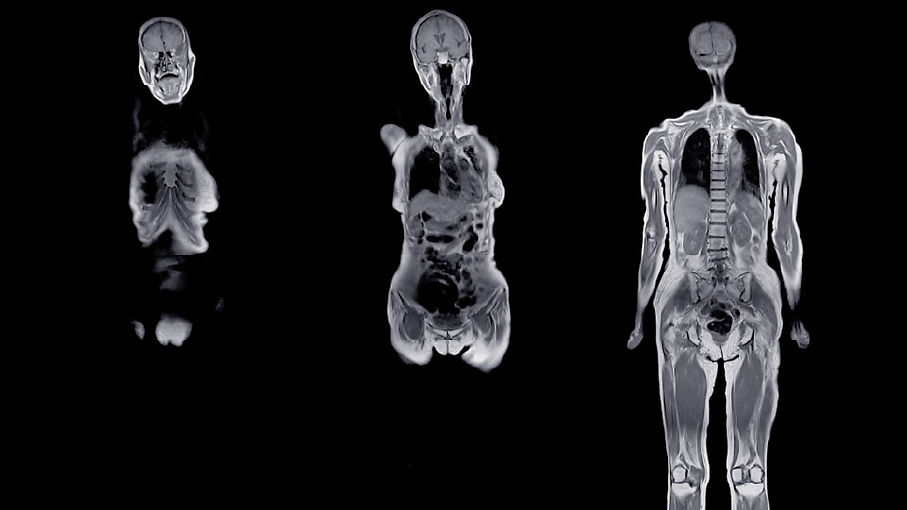
What Is MRI Screening?
MRI Screening is designed to evaluate an overall view of one or multiple areas of the body in a single session. It uses a more concise protocol with fewer imaging sequences compared to a full diagnostic study.
The primary objective of MRI Screening is to detect obvious abnormalities at an early stage, such as large masses, structural changes, or conditions that require further evaluation.
Characteristics of MRI Screening include:
Shorter examination time
Fewer imaging sequences
Focus on overall assessment
Suitable for preventive health check-ups
It can be compared to a “broad scan” that looks for clearly visible abnormalities, without going deeply into detailed tissue or structure analysis in a specific area.

What Is Full Diagnostic MRI?
Full Diagnostic MRI คือการตรวจ MRI ตามโปรโตคอลFull Diagnostic MRI follows a standard diagnostic protocol designed to provide in-depth information about a specific area of concern.
This type of examination uses multiple imaging sequences, such as T1-weighted, T2-weighted, STIR, and other specialized techniques to increase sensitivity in detecting abnormalities — even those that are small or complex.
In cases involving the spine and joints, a Full Diagnostic MRI can clearly visualize detailed structures including:
Intervertebral discs
Nerve roots
Spinal cord
Ligaments
Muscles
Menisci
Soft tissues surrounding the joint
Because it includes more imaging sequences and more refined parameter settings, it provides greater diagnostic accuracy, particularly for localized conditions.
Which Type Should You Choose for Spine and Joint Conditions?
If you are undergoing a general health check-up without specific symptoms, MRI Screening may be sufficient for initial evaluation.
However, if you are experiencing symptoms such as:
Lower back pain radiating down the leg
Numbness or weakness
Suspected herniated disc with nerve compression
Ligament or meniscus injury
A Full Diagnostic MRI will provide more detailed and accurate information, which is essential for proper treatment planning.
Consulting a physician before selecting the type of MRI is therefore an important step, ensuring that the examination matches your specific condition. Understanding these differences allows patients to make informed decisions and receive imaging that is most appropriate for their symptoms.
bottom of page