top of page

The dangers of calcium deposits forming on the spine, compressing nerves and damaging the spine itself.
Medically known as bone spurs or osteophytes, this condition occurs when bone degenerates, cracks, fractures, or is damaged. The body attempts to repair it by drawing calcium to replenish the bone, but instead of returning to normal, hard lumps like stones grow onto the bone.
Is calcium deposit growth really dangerous?
Generally, bone spurs are a natural bodily repair mechanism. However, problems arise when these calcium deposits press on nerves or other vital tissues. The result is a deep, radiating pain, sometimes like an electric shock, and may also be accompanied by numbness.
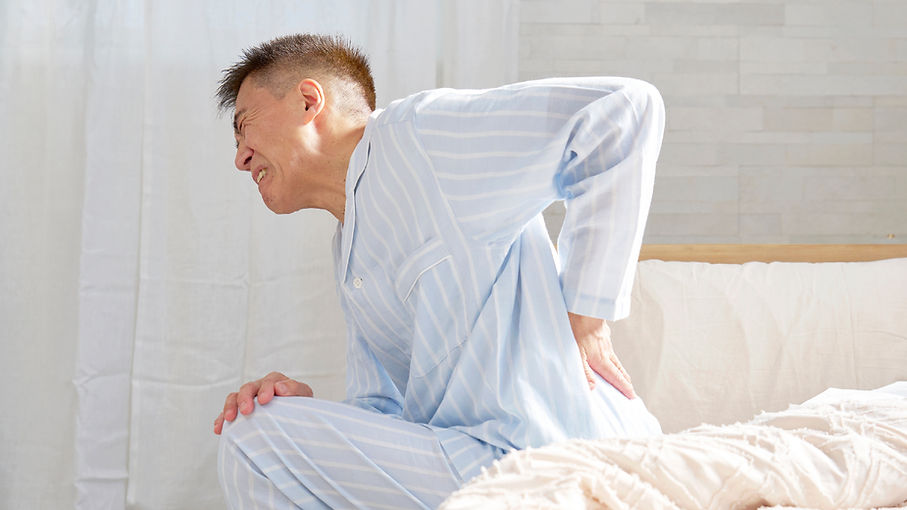
If the condition affects the spine, the symptoms are often not just ordinary back pain, but also radiating pain down the arms or legs, difficulty walking, pain when sitting, and difficulty standing up. If left untreated for a long time, it can lead to weakness in the limbs or loss of function in parts of the body.
Symptoms to watch for.
Many patients seek medical attention because they initially think their symptoms are just muscle inflammation from sitting at a desk or strenuous exercise. However, as the pain worsens over time, some feel like something is stabbing them internally. If the pain radiates down the leg or arm, or if there is numbness or muscle weakness, these are warning signs that should not be ignored.
External observation can be difficult because bone spurs are not always visible. A more accurate method is through medical imaging such as X-rays, CT scans, or MRI, which allow doctors to clearly see if there is abnormal bone growth pressing on a nerve.
📚 Let's check our spines!
📚 Standing MRI: Discovering the Causes of Back Pain
Calcium spurs can occur at any age, but those at particularly high risk include:
• Elderly people with age-related bone degeneration, especially those over 60 years of age.
• In post-menopausal women , due to a decrease in estrogen levels, bone calcium storage also decreases.
• Working adults who sit for long periods, move little, or have symptoms of office syndrome.
• Teenagers and athletes who engage in strenuous physical activity or experience repeated impacts may develop joint deformities and bone spurs.
Treatment methods recommended by doctors.
When it comes to treatment, many people may think of taking medication alone, but in reality, the treatment approach depends on the severity of the symptoms.
• In the initial stages, anti-inflammatory medication and physical therapy may be used to relieve symptoms.
• If nerve compression is evident, surgery is the most direct treatment option. Currently, at S Spine and Joint Hospital, we utilize advanced, specialized technologies such as Minimally Invasive Surgery (MIS) , which uses incisions as small as 0.5 centimeters, resulting in less blood loss, minimal pain, and faster recovery.
Because the goal of treatment is not just to remove the calcifications, but to help the patient return to a normal life again.”
How to care for and prevent it?
Although calcium deposits are associated with age-related degeneration, prevention is still possible, especially during childhood and adulthood.
• Eat enough calcium-rich foods before age 30 to build optimal bone strength.
• Exercise regularly , especially exercises that put pressure on the bones, such as walking, running, or lifting light weights, which helps the bones retain calcium better.
• Adjust your working posture ; avoid bending over, lifting objects incorrectly, or sitting for long periods without moving.
• Have regular bone health checkups , especially for women in menopause and the elderly.

Calcium deposits on the spine can start with minor symptoms that many people overlook, but if left untreated, they can have serious consequences for quality of life. Therefore, early and accurate diagnosis is crucial.
"Spinal health is not something to be taken lightly. The sooner you take care of it, the longer you can maintain a good quality of life."
bottom of page