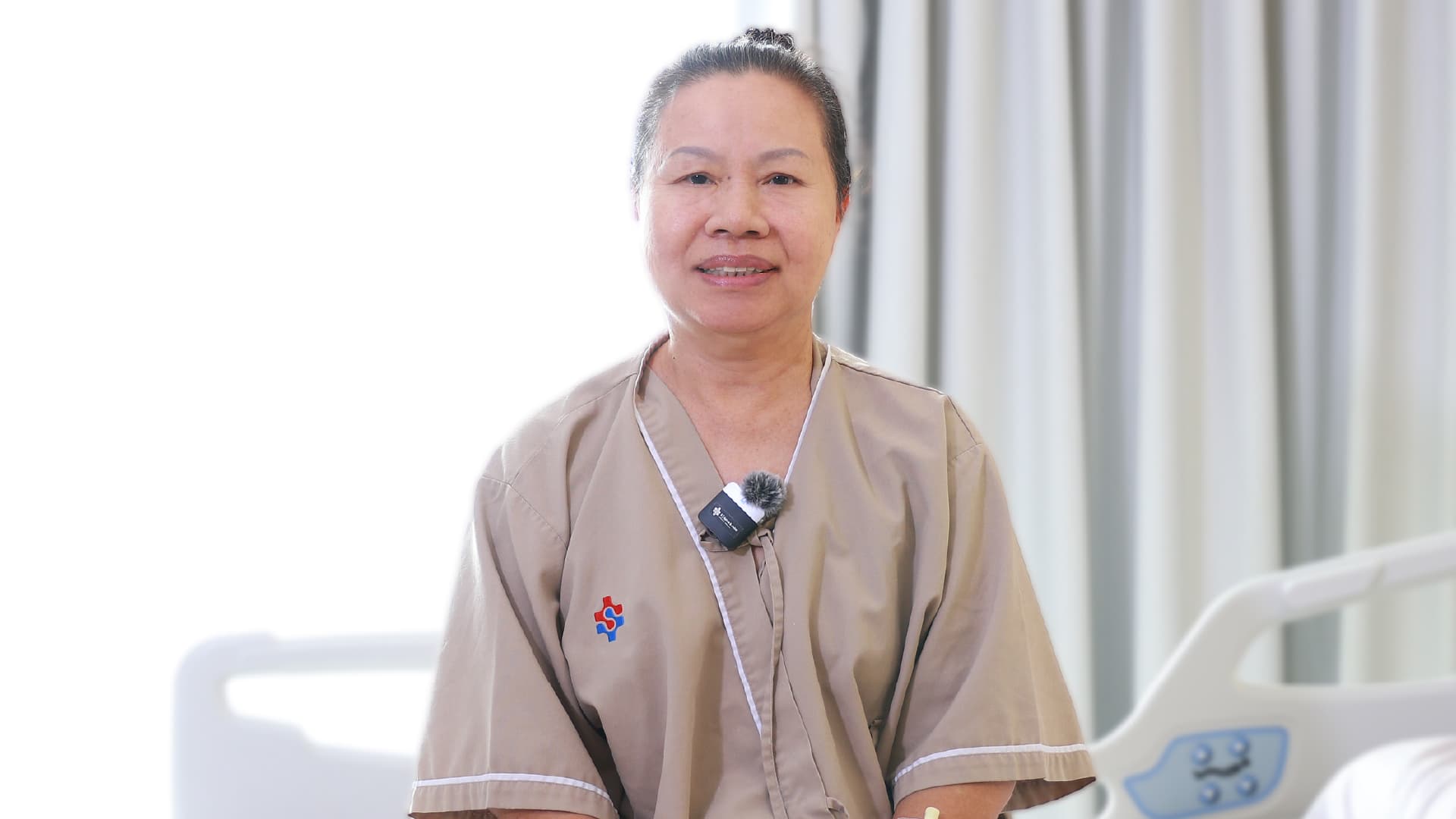
“Back Pain Radiating Down Both Legs, Causing Her to Walk with a Tilted Posture After 6 Years of Managing the Condition”
Back pain that was once manageable can gradually become more severe, eventually affecting mobility, daily activities, and overall quality of life. This is particularly challenging when multiple treatments have been tried without providing the expected relief.
This was the experience of Ms. Yuthamat Ketumalathip, aged 64, who had known that she had spondylolisthesis at the L4–L5 level for approximately six years. However, she had not decided to undergo surgery because she was still able to manage her condition, exercise, and carry on with her daily activities as usual.
Over the past two to three months, however, her back and hip pain became increasingly severe, radiating down both legs and accompanied by numbness. Her walking posture became noticeably tilted. Despite undergoing 22 physical therapy sessions, her symptoms did not improve. Eventually, she decided to return to S Spine & Joint Hospital for further evaluation and treatment.
Diagnosed with Spondylolisthesis 6 Years Ago but Was Still Able to Live Normally
Ms. Yuthamat explained that she first learned she had spondylolisthesis at the L4–L5 level approximately six years ago, following an examination at another hospital. At that time, the doctor had already recommended surgery, but she had not yet made the decision to proceed.
Throughout the following years, she made an effort to maintain her health by exercising regularly at the gym. This helped her continue living normally without experiencing severe pain that significantly interfered with her daily activities.
As long as her symptoms remained manageable, she continued with her usual routine without giving much thought to the possibility that her condition might become more severe in the future.
From Ordinary Back Pain to Radiating Leg Pain That Made Her Walk with a Tilted Posture
The turning point came approximately two to three months before her latest treatment, when her back pain began worsening rapidly and was no longer limited to her lower back.
She started experiencing hip pain, pain radiating down both legs, and numbness. Her walking pattern also became increasingly abnormal, to the point that she began walking with a noticeably tilted posture. Even her colleagues noticed the change and expressed concern.
These symptoms affected both her mobility and her overall well-being. Instead of living as comfortably as before, she had to be constantly cautious and endure recurring episodes of pain.
Ms. Yuthamat admitted that during the period when her symptoms were most severe, she felt unhappy because the pain had begun interfering with her life much more than ever before.
Multiple Physical Therapy Sessions, but Her Symptoms Did Not Improve
As the pain became more severe, Ms. Yuthamat tried various treatments in an effort to improve her condition. She underwent as many as 22 physical therapy sessions, along with injections intended to support peripheral nerve health at another hospital.
Despite these continued efforts, her back pain, hip pain, and radiating leg pain did not improve as she had hoped.
As the pain increasingly affected both her daily activities and emotional well-being, she decided to return to S Spine & Joint Hospital. She had previously discovered the hospital through Facebook and had undergone an MRI examination there six years earlier.
This time, she wanted a clearer understanding of what was causing her worsening symptoms and what treatment options could help her regain a better quality of life.
A New MRI Revealed Increased Scar Tissue Compressing the Spinal Nerves
Upon her return, the doctor recommended a new MRI examination to compare the latest findings with her previous images from six years earlier and assess how her spinal condition had changed.
The results showed that, in addition to the existing spondylolisthesis at L4–L5, degenerative changes had progressed. Scar tissue within the spinal canal was also found to be pressing against and compressing the spinal nerves.
These additional findings provided important information for evaluating the underlying causes of her increasingly severe radiating leg pain and numbness.
The doctor therefore recommended Percutaneous Stenoscopic Lumbar Decompression (PSLD), an endoscopic procedure to address the structures compressing the nerves, based on her individual condition.
Ms. Yuthamat decided to proceed with treatment because she trusted the hospital’s expertise. She was also impressed by how thoroughly the doctor explained her MRI findings and the treatment process in clear, easy-to-understand terms. This helped her understand exactly what needed to be treated and why the procedure was recommended.
PSLD Endoscopic Surgery Was Not as Frightening as She Had Expected
Ms. Yuthamat recalled that when she entered the operating room, she felt reassured and was not as frightened as she had initially expected. Several members of the medical team were present to look after her throughout the process.
After surgery, when she woke up, what surprised her most was that she barely felt any pain in her back. She described the sensation as being similar to having nothing more than a plaster placed over the area.
On the first night after surgery, she was able to get up and walk to the bathroom by herself, with a nurse assisting and monitoring her because she was still experiencing slight dizziness from the anesthesia.
What she noticed most clearly was an increased sense of physical comfort. The pain she had previously experienced when moving her legs had also noticeably decreased.
Just 1 Day After Treatment, She Felt Approximately 80% Better
Just one day after treatment, Ms. Yuthamat estimated that her overall condition had improved by approximately 80%. She was already beginning to notice meaningful changes in her daily life.
Previously, when she woke up in the morning, she would usually massage her feet to help them feel more relaxed before getting up and starting her day. After treatment, she no longer needed to do this as she had before.
In addition, the numbness she had previously experienced had decreased significantly. Walking felt easier and more comfortable, and moving her body was no longer as painful as it had been before treatment.
For Ms. Yuthamat, experiencing such noticeable improvements in such a short period made her feel as though she had been given a new lease on life after enduring pain that had disrupted her daily activities for months.
From Pain and Suffering to Enjoying Life Again
She would like to encourage anyone experiencing chronic back pain, hip pain, or pain radiating down the legs not to let the symptoms continue disrupting their lives without seeking an evaluation. What may seem like ordinary muscle aches could sometimes be associated with underlying spinal or nerve conditions.
If symptoms do not improve with treatment or become severe enough to affect walking and daily activities, it is important to consult a spine specialist for a proper evaluation, identification of the underlying cause, and consideration of treatment options appropriate for each individual.
For Ms. Yuthamat, deciding to return for another examination after six years marked the beginning of addressing a problem that had gradually accumulated over time. It was also an important step toward regaining her comfort and happiness in everyday life.